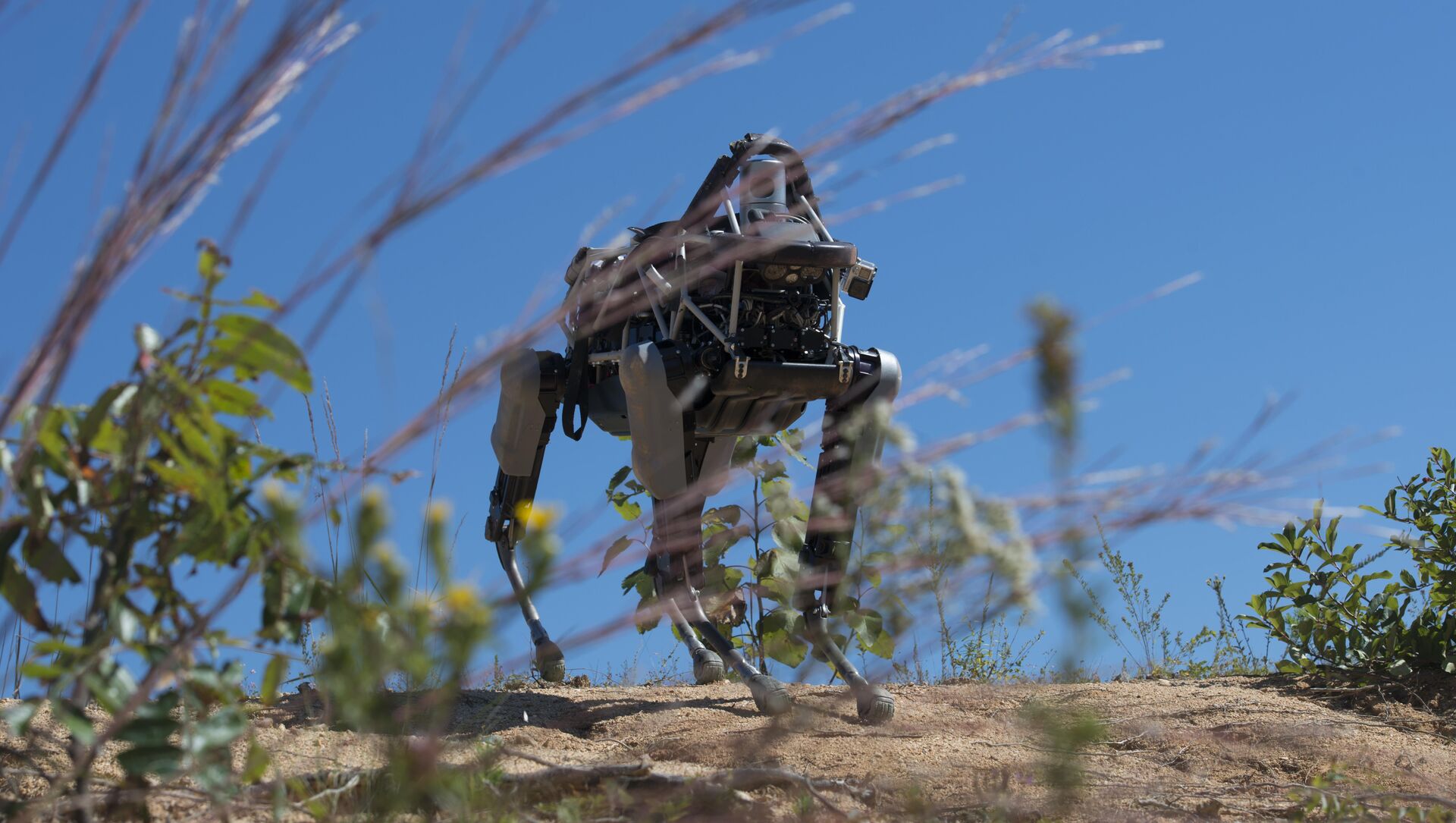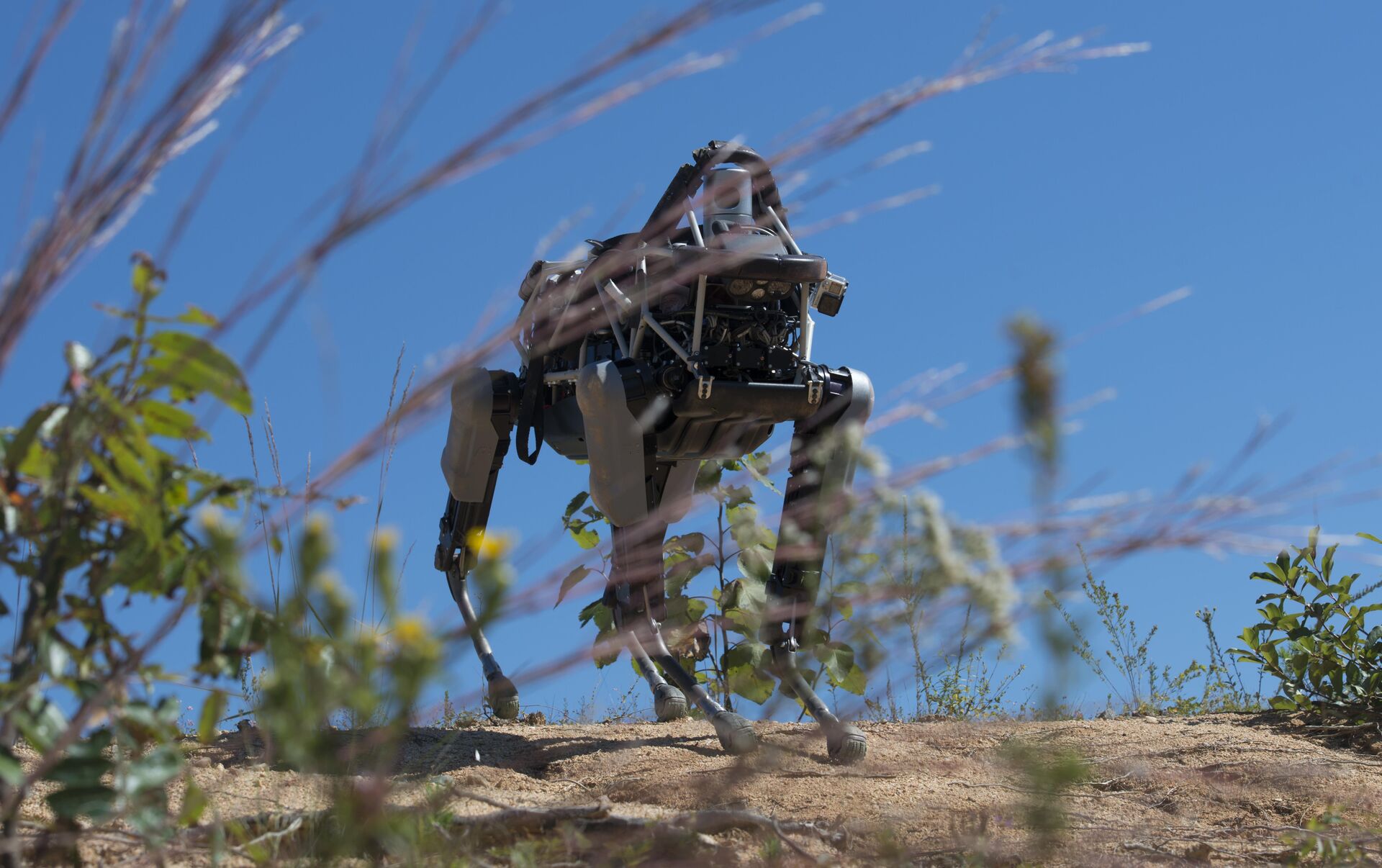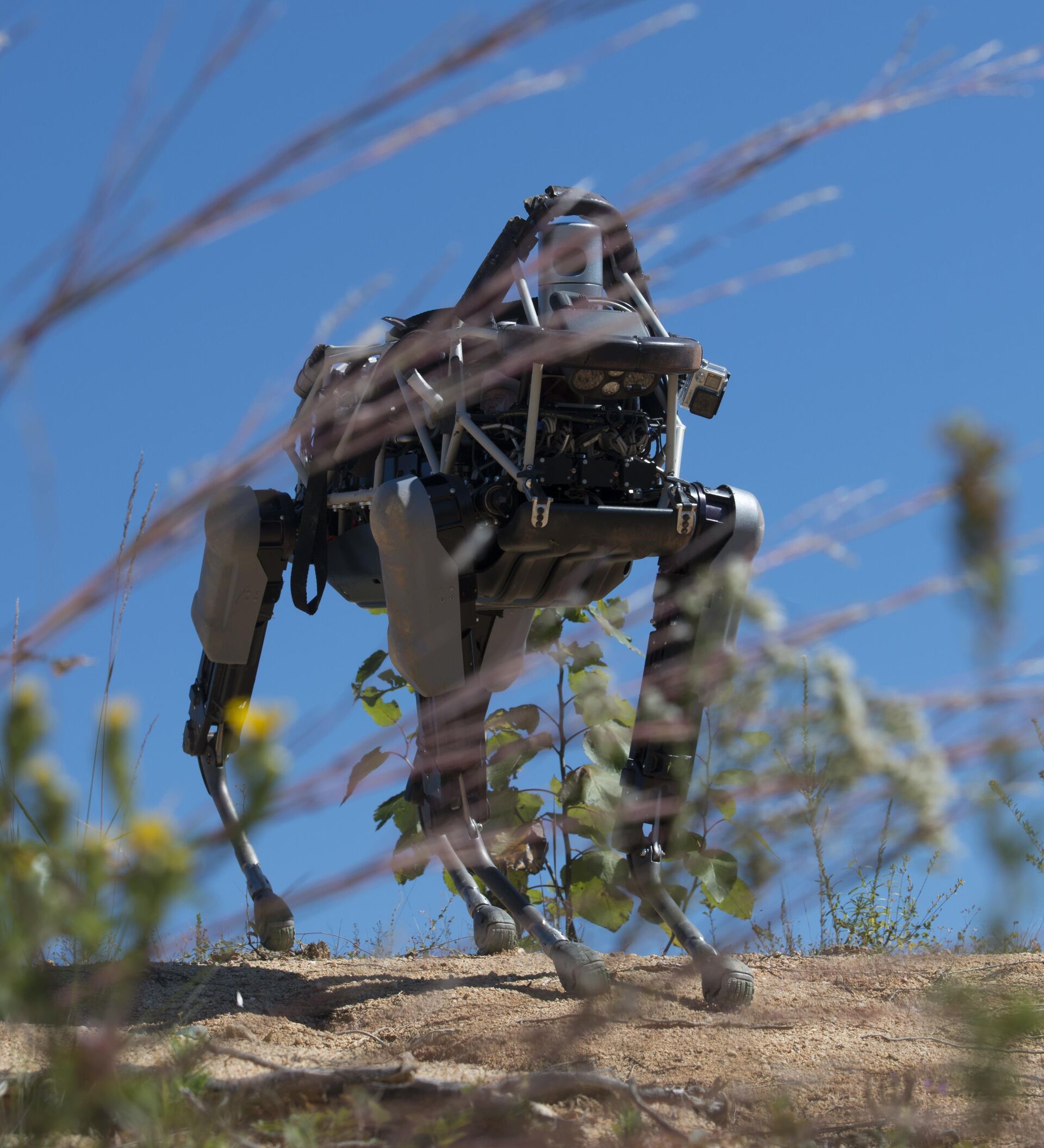

A human operator controls the robot wirelessly from a distance of up to a third of a mile using a laptop equipped with a radio transmitter and a video game-like controller.
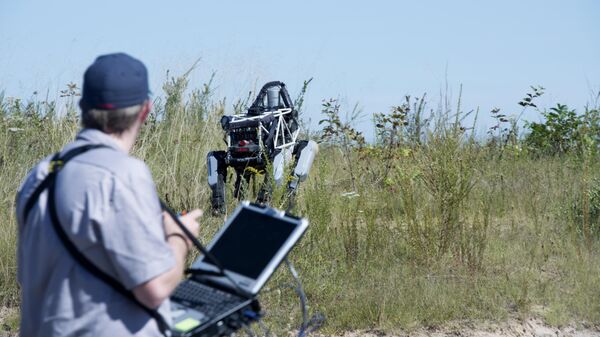
The new Boston Dynamics’ military robot underwent testing alongside other devices as a part of the Marine’s battlefield robotics evaluation program at their base in Quantico, Virginia. The project is supported by Pentagon’s Defense Advanced Research Projects Agency (DARPA).
TODAY:
— U.S. Marines (@USMC) September 16, 2015
The Marine Corps Warfighting Lab tests the future of 4-legged companions in the hills & woods of @MCB_Quantico pic.twitter.com/WSuninTmVf
“We want to continue to experiment with quadruped technology and find ways that this can be employed to enhance the Marine Corps warfighting capabilities,” said Capt. James Pineiro, the branch head for the Marine Corps Warfighting Lab.
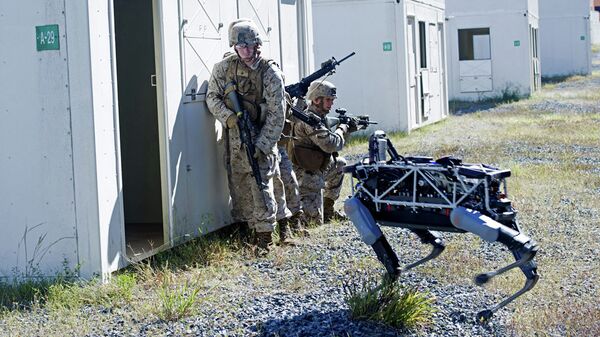
Spot has been tested on various missions, including entering buildings, that require peaking around corners and searching for possible threats using its advanced sensors. Besides urban terrain, the robot has proven to operate in woodlands and hills.
Spot’s predecessors include larger, clumsier and noisier models BigDog and LS3.
“Spot is great and has exceeded the metrics that we’ve provided,” said Pineiro. “We see it as a great potential for the future dismounted infantry.”
The exact timeframe for battlefield robots joining the active ranks of the Marine Corps remains unspecified, while research and development continues.
“The Marines have been very receptive to the new technology, embrace it and come up with new ideas we couldn’t even dream up,” said Pineiro.